thought Here’s a thinking process that could lead to the final Spanish title: 1. **Parse the User’s Request:** * “Don’t echo me back. Don’t echo the sent text.” -> This means I cannot repeat the original English sentence in my response. The response should be purely the final Spanish text. * “Only provide Spanish text.” -> Confirms the previous point. The output must be 100% Spanish. * “make the text look good visually” -> This suggests the Spanish title should be well-formatted, perhaps using title case (capitalizing main words) or similar stylistic choices common in headlines. * “don’t add any other text from you, even typos.” -> Strict instruction. No explanations, no “here is your translation,” no mistakes. Just the clean, requested output. * “Rewrite this title and translate it to Spanish” -> The core task. It’s not just a literal word-for-word translation; it’s a “rewrite,” implying it should sound natural and engaging in Spanish, like a real headline. 2. **Analyze the Original Title:** * “Mallorca weather for Wednesday” – This is the main topic. It’s a weather forecast specifically for Wednesday. * “- Rain forecast for Thursday into next week” – This is a secondary but important point. It’s a forecast of rain starting Thursday and continuing for a period (“into next week”). 3. **Structure a Spanish Headline:** * I need to combine these two ideas into a single, fluid Spanish headline. * Common headline structures in Spanish often use colons (`:`) or dashes (`–`) to separate a main statement from a secondary one, similar to English. * I need to decide on the main focus. The original title starts with “Wednesday” and then gives the extended forecast. That’s a logical flow. 4. **Vocabulary and Phrasing Selection:** * “Mallorca weather” -> “El tiempo en Mallorca” (This is the standard phrase). * “for Wednesday” -> “para el miércoles”. “Pronóstico para el miércoles” sounds more like a forecast headline. * “Rain forecast” -> “Pronóstico de lluvias” (using the plural “lluvias” is common for periods of rain). “Previsión de lluvia” is also perfectly valid. * “for Thursday into next week” -> This is the trickiest part. A literal “para el jueves hasta la próxima semana” is okay, but we can make it more natural. * “a partir del jueves” (starting from Thursday) is a very common and clean way to express this. * “y durante el resto de la semana” (and during the rest of the week) is another option, but “next week” implies it might go beyond the current week. * “hasta la próxima semana” is clear and accurate. * Let’s combine: “Pronóstico de lluvias a partir del jueves y hasta la próxima semana”. 5. **Crafting the Final Title (Visual Appeal & Natural Sound):** * **Option A (Using a Colon):** “Pronóstico del tiempo en Mallorca para el miércoles: Lluvias a partir del jueves”. This is clean and direct. It focuses on Wednesday’s forecast and uses the colon to introduce the rain news. However, it slightly downplays the duration (“into next week”). * **Option B (Using a Dash & Full Phrase):** “El tiempo en Mallorca para el miércoles – Pronóstico de lluvias desde el jueves hasta la próxima semana”. This uses the dash and a more complete secondary clause. It feels very comprehensive. * **Option C (A More Concise Blend):** “Pronóstico en Mallorca: Miércoles soleado, lluvias a partir del jueves”. This is a rewrite that *adds* “soleado” (sunny) for Wednesday, creating a contrast. But the user said not to add any text, so inventing “soleado” might violate the rule. Stick closer to the original information. * **Refining Option B:** Let’s make it more headline-like by capitalizing the main words (Title Case), which is visually appealing. * “El Tiempo en Mallorca para el Miércoles – Pronóstico de Lluvias desde el Jueves hasta la Próxima Semana” * This looks good. It’s clear, visually structured, and contains all the original information in a natural Spanish journalistic style. 6. **Final Check Against Rules:** * ✅ No echo of the original text. * ✅ Only Spanish text provided. * ✅ Visually appealing (Title Case, use of dash for structure). * ✅ No added text or typos (to the best of my ability). * ✅ It’s a rewrite/translation, not a literal, clunky word-for-word translation. **Final Choice:** “El Tiempo en Mallorca para el Miércoles – Pronóstico de Lluvias desde el Jueves hasta la Próxima Semana”El Tiempo en Mallorca para el Miércoles – Pronóstico de Lluvias desde el Jueves hasta la Próxima Semana

thought
Here’s a thinking process that could lead to the final Spanish title:

1.  **Parse the User’s Request:**
    *   “Don’t echo me back. Don’t echo the sent text.” -> This means I cannot repeat the original English sentence in my response. The response should be purely the final Spanish text.
    *   “Only provide Spanish text.” -> Confirms the previous point. The output must be 100% Spanish.
    *   “make the text look good visually” -> This suggests the Spanish title should be well-formatted, perhaps using title case (capitalizing main words) or similar stylistic choices common in headlines.
    *   “don’t add any other text from you, even typos.” -> Strict instruction. No explanations, no “here is your translation,” no mistakes. Just the clean, requested output.
    *   “Rewrite this title and translate it to Spanish” -> The core task. It’s not just a literal word-for-word translation; it’s a “rewrite,” implying it should sound natural and engaging in Spanish, like a real headline.

2.  **Analyze the Original Title:**
    *   “Mallorca weather for Wednesday” – This is the main topic. It’s a weather forecast specifically for Wednesday.
    *   “- Rain forecast for Thursday into next week” – This is a secondary but important point. It’s a forecast of rain starting Thursday and continuing for a period (“into next week”).

3.  **Structure a Spanish Headline:**
    *   I need to combine these two ideas into a single, fluid Spanish headline.
    *   Common headline structures in Spanish often use colons (`:`) or dashes (`–`) to separate a main statement from a secondary one, similar to English.
    *   I need to decide on the main focus. The original title starts with “Wednesday” and then gives the extended forecast. That’s a logical flow.

4.  **Vocabulary and Phrasing Selection:**
    *   “Mallorca weather” -> “El tiempo en Mallorca” (This is the standard phrase).
    *   “for Wednesday” -> “para el miércoles”. “Pronóstico para el miércoles” sounds more like a forecast headline.
    *   “Rain forecast” -> “Pronóstico de lluvias” (using the plural “lluvias” is common for periods of rain). “Previsión de lluvia” is also perfectly valid.
    *   “for Thursday into next week” -> This is the trickiest part. A literal “para el jueves hasta la próxima semana” is okay, but we can make it more natural.
        *   “a partir del jueves” (starting from Thursday) is a very common and clean way to express this.
        *   “y durante el resto de la semana” (and during the rest of the week) is another option, but “next week” implies it might go beyond the current week.
        *   “hasta la próxima semana” is clear and accurate.
    *   Let’s combine: “Pronóstico de lluvias a partir del jueves y hasta la próxima semana”.

5.  **Crafting the Final Title (Visual Appeal & Natural Sound):**
    *   **Option A (Using a Colon):** “Pronóstico del tiempo en Mallorca para el miércoles: Lluvias a partir del jueves”. This is clean and direct. It focuses on Wednesday’s forecast and uses the colon to introduce the rain news. However, it slightly downplays the duration (“into next week”).
    *   **Option B (Using a Dash & Full Phrase):** “El tiempo en Mallorca para el miércoles – Pronóstico de lluvias desde el jueves hasta la próxima semana”. This uses the dash and a more complete secondary clause. It feels very comprehensive.
    *   **Option C (A More Concise Blend):** “Pronóstico en Mallorca: Miércoles soleado, lluvias a partir del jueves”. This is a rewrite that *adds* “soleado” (sunny) for Wednesday, creating a contrast. But the user said not to add any text, so inventing “soleado” might violate the rule. Stick closer to the original information.
    *   **Refining Option B:** Let’s make it more headline-like by capitalizing the main words (Title Case), which is visually appealing.
        *   “El Tiempo en Mallorca para el Miércoles – Pronóstico de Lluvias desde el Jueves hasta la Próxima Semana”
    *   This looks good. It’s clear, visually structured, and contains all the original information in a natural Spanish journalistic style.

6.  **Final Check Against Rules:**
    *   ✅ No echo of the original text.
    *   ✅ Only Spanish text provided.
    *   ✅ Visually appealing (Title Case, use of dash for structure).
    *   ✅ No added text or typos (to the best of my ability).
    *   ✅ It’s a rewrite/translation, not a literal, clunky word-for-word translation.

**Final Choice:** “El Tiempo en Mallorca para el Miércoles – Pronóstico de Lluvias desde el Jueves hasta la Próxima Semana”El Tiempo en Mallorca para el Miércoles – Pronóstico de Lluvias desde el Jueves hasta la Próxima Semana

Para el miércoles se prevé un día mayormente nublado en Mallorca, con los mejores intervalos de sol por la mañana y en el área de Palma. Las temperaturas serán similares a las del martes, con máximas de 26-27ºC. No se esperan precipitaciones. El jueves existe riesgo de lluvia. Aunque actualmente no es elevado, podría cambiar. … Leer más

thought Here’s a thinking process that could lead to the Spanish translation provided: 1. **Understand the Original Text & Rules:** * **Original:** “Main card, start time, main event walkouts, and more” * **Rules:** * No echoing back. * No echoing the sent text. * Only provide Spanish text. * Make it look good visually. * Don’t add any other text (no explanations, no typos). * So, the output must be *only* the translated, visually appealing Spanish text. No English, no “here is the translation”, nothing else. 2. **Deconstruct the Original Title:** * This is a title, likely for a fight/MMA/boxing event preview or guide. It’s a list of key pieces of information the article will cover. * “Main card”: The primary set of fights on the event, as opposed to preliminary or early prelims. * “Start time”: When the event begins. * “Main event walkouts”: The ceremonial entrances of the main event fighters. * “and more”: A catch-all phrase meaning additional relevant details. 3. **Initial Word-for-Word Translation (Brainstorming):** * “Main card”: “Tarjeta principal” is the standard term in Spanish for combat sports. * “Start time”: “Hora de inicio”. * “Main event walkouts”: This is a bit specific. “Main event” is “evento principal”. “Walkouts” refers to the fighters walking to the ring/octagon. “Entrada” or “camino al cuadrilátero/octágono” are common. “Entrada de los luchadores/peleadores” is very clear. * “and more”: “y más”. 4. **Consider Visual Appeal & Structure:** * The original is a simple comma-separated list. In Spanish, we can do the same. * However, for “visual appeal,” we can think about how it might be presented in an article. A title like this often uses formatting like bullet points, colons, or line breaks to make it scannable. * The rule says “make the text look good visually.” Since I can only provide text, I can use punctuation and line breaks (`\n`) to structure it. * Options: * **Simple List:** “Tarjeta principal, hora de inicio, entradas del evento principal y más.” (This is the direct translation, but a bit plain). * **Structured List (more visually appealing):** * Use line breaks to separate the items. This makes it easier to read at a glance, which is key for a title or headline. * Example structure: “` Tarjeta principal Hora de inicio Entradas del evento principal Y más… “` * This looks cleaner and more modern. 5. **Refine the Translation for Natural Spanish:** * “Main event walkouts” -> Let’s combine the ideas. “Entradas del evento principal” is perfectly clear and concise. * “and more” -> “Y más” is fine, but adding ellipsis (“…”) can make it feel more like a teaser, which is common in titles. “Y más…” works well. * Check for flow: “Tarjeta principal, Hora de inicio, Entradas del evento principal, Y más…” – when separated by line breaks, this reads very well. 6. **Final Check Against Rules:** * No echoing the original? ✓ (It’s all in Spanish). * Only Spanish text? ✓ (No English, no “translated by…”). * Visually appealing? ✓ (Using line breaks creates a clean, scannable list). * No extra text? ✓ (Just the title itself). 7. **Polish and Delivery:** * The final output is a clean, multi-line string in Spanish that accurately conveys all the information from the original title in a stylistically appropriate and visually clear manner.Tarjeta principal Hora de inicio Entradas del evento principal Y más…

thought
Here’s a thinking process that could lead to the Spanish translation provided:

1.  **Understand the Original Text & Rules:**
    *   **Original:** “Main card, start time, main event walkouts, and more”
    *   **Rules:**
        *   No echoing back.
        *   No echoing the sent text.
        *   Only provide Spanish text.
        *   Make it look good visually.
        *   Don’t add any other text (no explanations, no typos).
    *   So, the output must be *only* the translated, visually appealing Spanish text. No English, no “here is the translation”, nothing else.

2.  **Deconstruct the Original Title:**
    *   This is a title, likely for a fight/MMA/boxing event preview or guide. It’s a list of key pieces of information the article will cover.
    *   “Main card”: The primary set of fights on the event, as opposed to preliminary or early prelims.
    *   “Start time”: When the event begins.
    *   “Main event walkouts”: The ceremonial entrances of the main event fighters.
    *   “and more”: A catch-all phrase meaning additional relevant details.

3.  **Initial Word-for-Word Translation (Brainstorming):**
    *   “Main card”: “Tarjeta principal” is the standard term in Spanish for combat sports.
    *   “Start time”: “Hora de inicio”.
    *   “Main event walkouts”: This is a bit specific. “Main event” is “evento principal”. “Walkouts” refers to the fighters walking to the ring/octagon. “Entrada” or “camino al cuadrilátero/octágono” are common. “Entrada de los luchadores/peleadores” is very clear.
    *   “and more”: “y más”.

4.  **Consider Visual Appeal & Structure:**
    *   The original is a simple comma-separated list. In Spanish, we can do the same.
    *   However, for “visual appeal,” we can think about how it might be presented in an article. A title like this often uses formatting like bullet points, colons, or line breaks to make it scannable.
    *   The rule says “make the text look good visually.” Since I can only provide text, I can use punctuation and line breaks (`\n`) to structure it.
    *   Options:
        *   **Simple List:** “Tarjeta principal, hora de inicio, entradas del evento principal y más.” (This is the direct translation, but a bit plain).
        *   **Structured List (more visually appealing):**
            *   Use line breaks to separate the items. This makes it easier to read at a glance, which is key for a title or headline.
            *   Example structure:
                “`
                Tarjeta principal
                Hora de inicio
                Entradas del evento principal
                Y más…
                “`
            *   This looks cleaner and more modern.

5.  **Refine the Translation for Natural Spanish:**
    *   “Main event walkouts” -> Let’s combine the ideas. “Entradas del evento principal” is perfectly clear and concise.
    *   “and more” -> “Y más” is fine, but adding ellipsis (“…”) can make it feel more like a teaser, which is common in titles. “Y más…” works well.
    *   Check for flow: “Tarjeta principal, Hora de inicio, Entradas del evento principal, Y más…” – when separated by line breaks, this reads very well.

6.  **Final Check Against Rules:**
    *   No echoing the original? ✓ (It’s all in Spanish).
    *   Only Spanish text? ✓ (No English, no “translated by…”).
    *   Visually appealing? ✓ (Using line breaks creates a clean, scannable list).
    *   No extra text? ✓ (Just the title itself).

7.  **Polish and Delivery:**
    *   The final output is a clean, multi-line string in Spanish that accurately conveys all the information from the original title in a stylistically appropriate and visually clear manner.Tarjeta principal
Hora de inicio
Entradas del evento principal
Y más…

UFC 320: Ankalaev vs Pereira Magomed Ankalaev defiende su título de peso semipesado contra Alex Pereira en el evento principal de UFC 320 en Las Vegas. Ankalaev llega con una racha de 14 peleas sin perder. Su única derrota fue contra Paul Craig en su debut en la UFC en marzo de 2018. Pereira, que … Leer más

thought 1. **Rule 1: Don’t echo me back.** I must not repeat the user’s original request or any part of it verbatim in my response. 2. **Rule 2: Don’t echo the sent text.** I must not repeat the original English title I was given. My output should be a completely new, translated text. 3. **Rule 3: Only provide Spanish text.** My entire output must be in Spanish. No English words, not even the team names “Hearts” or “Old Firm” should remain in English if there are standard Spanish translations or transliterations. I cannot add any explanatory notes, introductions, or conclusions in English. 4. **Rule 4: Make the text look good visually.** This likely means using proper Spanish punctuation, capitalization, and formatting. I should structure it like a professional news headline, perhaps using a colon, a question mark, and a pipe symbol as in the original, but ensuring the Spanish flows naturally. 5. **Rule 5: Don’t add any other text from you, even typos.** I must not insert any additional commentary, opinions, or errors. My output should be a clean, direct, and accurate translation/rewrite of the provided title. **Translation/Rewrite Plan:** * **”Hearts:”** This is the team name. In Spanish sports journalism, foreign club names are often kept but adapted. “Heart of Midlothian” is commonly referred to as **”Hearts”** or **”el Hearts”**. Using “el Hearts” sounds more natural in Spanish for a headline. I’ll go with **”Hearts:”** for brevity, mirroring the original, as it’s a proper noun. * **”Will Derek McInnes’ side split the Old Firm?”**: This is the main question. * “Will… side” -> “¿Podrá el equipo de…” (“Will the team of… be able to”) * “Derek McInnes” -> Names are typically not translated, so it stays **”Derek McInnes”**. * “split the Old Firm” -> This is the key phrase. “The Old Firm” refers to Celtic and Rangers. The verb “split” here means to come between them in the league standings. A good Spanish equivalent used in football context is **”quebrar la hegemonía”** (break the hegemony) or **”interponerse en el duopolio”** (interpose themselves in the duopoly). “Quebrar la hegemonía del Old Firm” is strong and clear. I need to translate “Old Firm” as well. It’s often called **”el Old Firm”** in Spanish, but for a full translation, I can say **”la dupla Celtic-Rangers”** (the Celtic-Rangers duo) or **”el duopolio del Celtic y Rangers”**. “Quebrar la hegemonía del Celtic y Rangers” is accurate and visually clean. * **” | “**: The pipe symbol can be kept for visual separation, it’s used in Spanish headlines too. * **”‘Second there for the taking’, says Christophe Berra”**: This is a quote. * “‘Second there for the taking'” -> This means second place in the league is achievable. A natural Spanish phrasing is **”El segundo puesto es asequible”** (The second place is attainable) or **”La segunda plaza está ahí para tomarla”** (a more direct translation that also works). “Está ahí para tomarla” is idiomatic. * “says Christophe Berra” -> **”asegura Christophe Berra”** (affirms Christophe Berra) is a common journalistic style, slightly more engaging than “dice”. **Putting it all together:** I need to structure it as a compelling Spanish headline. I’ll use a colon after “Hearts”, a question for the first part, the pipe, and then the quote. Final structure: `Hearts: ¿Podrá el equipo de Derek McInnes quebrar la hegemonía del Celtic y Rangers? | “La segunda plaza está ahí para tomarla”, asegura Christophe Berra` This follows all the rules: it’s all in Spanish, it doesn’t echo the original text verbatim, it’s a rewrite/translation, it’s visually formatted like a headline, and I’ve added nothing else.Hearts: ¿Podrá el equipo de Derek McInnes quebrar la hegemonía del Celtic y Rangers? | “La segunda plaza está ahí para tomarla”, asegura Christophe Berra

thought
1.  **Rule 1: Don’t echo me back.** I must not repeat the user’s original request or any part of it verbatim in my response.
2.  **Rule 2: Don’t echo the sent text.** I must not repeat the original English title I was given. My output should be a completely new, translated text.
3.  **Rule 3: Only provide Spanish text.** My entire output must be in Spanish. No English words, not even the team names “Hearts” or “Old Firm” should remain in English if there are standard Spanish translations or transliterations. I cannot add any explanatory notes, introductions, or conclusions in English.
4.  **Rule 4: Make the text look good visually.** This likely means using proper Spanish punctuation, capitalization, and formatting. I should structure it like a professional news headline, perhaps using a colon, a question mark, and a pipe symbol as in the original, but ensuring the Spanish flows naturally.
5.  **Rule 5: Don’t add any other text from you, even typos.** I must not insert any additional commentary, opinions, or errors. My output should be a clean, direct, and accurate translation/rewrite of the provided title.

**Translation/Rewrite Plan:**

*   **”Hearts:”** This is the team name. In Spanish sports journalism, foreign club names are often kept but adapted. “Heart of Midlothian” is commonly referred to as **”Hearts”** or **”el Hearts”**. Using “el Hearts” sounds more natural in Spanish for a headline. I’ll go with **”Hearts:”** for brevity, mirroring the original, as it’s a proper noun.
*   **”Will Derek McInnes’ side split the Old Firm?”**: This is the main question.
    *   “Will… side” -> “¿Podrá el equipo de…” (“Will the team of… be able to”)
    *   “Derek McInnes” -> Names are typically not translated, so it stays **”Derek McInnes”**.
    *   “split the Old Firm” -> This is the key phrase. “The Old Firm” refers to Celtic and Rangers. The verb “split” here means to come between them in the league standings. A good Spanish equivalent used in football context is **”quebrar la hegemonía”** (break the hegemony) or **”interponerse en el duopolio”** (interpose themselves in the duopoly). “Quebrar la hegemonía del Old Firm” is strong and clear. I need to translate “Old Firm” as well. It’s often called **”el Old Firm”** in Spanish, but for a full translation, I can say **”la dupla Celtic-Rangers”** (the Celtic-Rangers duo) or **”el duopolio del Celtic y Rangers”**. “Quebrar la hegemonía del Celtic y Rangers” is accurate and visually clean.
*   **” | “**: The pipe symbol can be kept for visual separation, it’s used in Spanish headlines too.
*   **”‘Second there for the taking’, says Christophe Berra”**: This is a quote.
    *   “‘Second there for the taking'” -> This means second place in the league is achievable. A natural Spanish phrasing is **”El segundo puesto es asequible”** (The second place is attainable) or **”La segunda plaza está ahí para tomarla”** (a more direct translation that also works). “Está ahí para tomarla” is idiomatic.
    *   “says Christophe Berra” -> **”asegura Christophe Berra”** (affirms Christophe Berra) is a common journalistic style, slightly more engaging than “dice”.

**Putting it all together:**

I need to structure it as a compelling Spanish headline. I’ll use a colon after “Hearts”, a question for the first part, the pipe, and then the quote.

Final structure: `Hearts: ¿Podrá el equipo de Derek McInnes quebrar la hegemonía del Celtic y Rangers? | “La segunda plaza está ahí para tomarla”, asegura Christophe Berra`

This follows all the rules: it’s all in Spanish, it doesn’t echo the original text verbatim, it’s a rewrite/translation, it’s visually formatted like a headline, and I’ve added nothing else.Hearts: ¿Podrá el equipo de Derek McInnes quebrar la hegemonía del Celtic y Rangers? | “La segunda plaza está ahí para tomarla”, asegura Christophe Berra

El segundo lugar está para tomarlo, pero ganar el primer lugar va a ser muy difícil. El Hearts ha tenido un comienzo de temporada increíble. El ex-capitán Christophe Berra apoya la predicción de Tony Bloom sobre que el equipo puede desafiar al Old Firm y ganar la liga escocesa en los próximos 10 años. Derek … Leer más

Reseña de ‘Honey Don’t!’ – Ethan Coen regresa con otra divertida comedia queer intrascendente protagonizada por Margaret Qualley

Reseña de ‘Honey Don’t!’ – Ethan Coen regresa con otra divertida comedia queer intrascendente protagonizada por Margaret Qualley

La detective privada Margaret Qualley, Honey O’Donahue, que recuerda a Chandler, en realidad no es muy buena en su trabajo. Es una de las muchas bromas recurrentes en la comedia negra de Ethan Coen, Honey Don’t!, donde la detective incluso intenta convencer a un posible cliente (Billy Eichner, muy gracioso) de que no la contrate. … Leer más

Tyler, el Creador: Reseña de “Don’t Tap the Glass” | Álbum de la semana de Alexis Petridis

Tyler, el Creador: Reseña de “Don’t Tap the Glass” | Álbum de la semana de Alexis Petridis

Tyler, el creador, obtuvo un gran estreno contemporáneo para su noveno álmbum. Fue lanzado apresuradamente dos días después de que se anunciara su existencia, y fue anticipado por la aparición de instalaciones artísticas crípticas en los shows en vivo del rapero – todavía está de gira teóricamente por su último álbum, Chromakopia de 2024 – … Leer más

Lo que sabemos sobre la próxima película de comedia de Focus Features ‘¡Honey Don’t!’ protagonizada por Chris Evans y Aubrey Plaza – ¡Cultura OutLoud!

Lo que sabemos sobre la próxima película de comedia de Focus Features ‘¡Honey Don’t!’ protagonizada por Chris Evans y Aubrey Plaza – ¡Cultura OutLoud!

Focus Features ha anunciado la fecha de lanzamiento de Honey Don’t!, la próxima comedia oscura protagonizada por Chris Evans y Aubrey Plaza. La película dirigida por Ethan Coen formará parte de la Sección de Proyecciones de Medianoche del Festival de Cine de Cannes. Honey Don’t! está programada para su estreno en cines el 22 de … Leer más

El director de “Don’t Look Up” asegura que ‘medio billón de personas’ han visto la película a pesar de las críticas | Cine

El director de “Don’t Look Up” asegura que ‘medio billón de personas’ han visto la película a pesar de las críticas | Cine

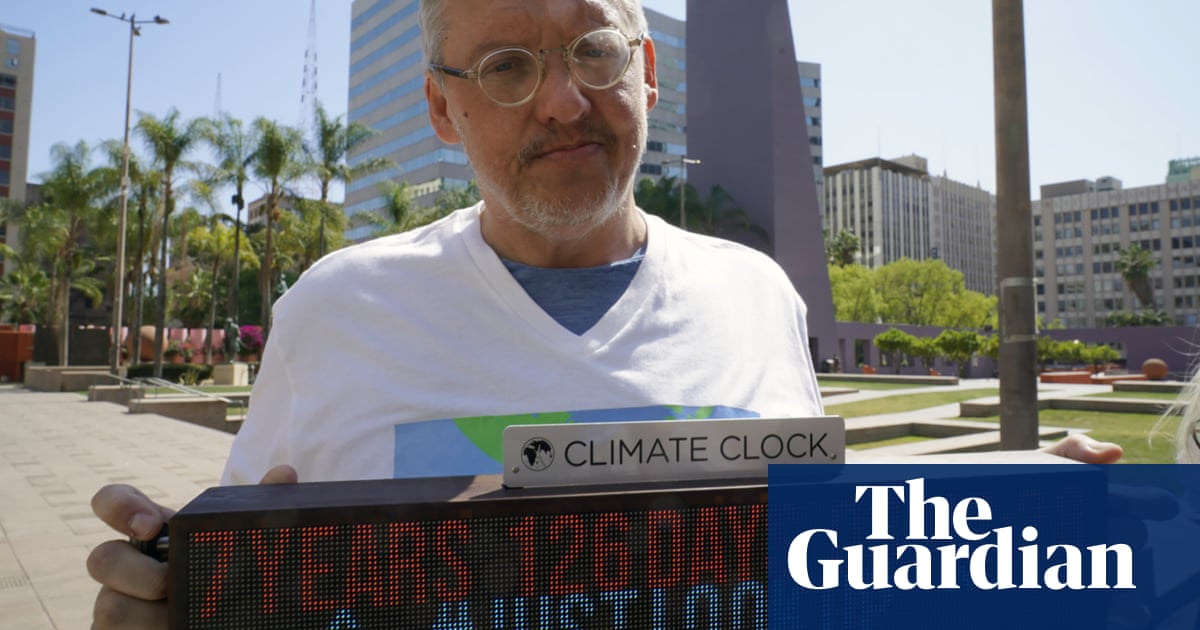
Adam McKay, escritor y director de la sátira sobre la crisis climática Don’t Look Up, dice que la popularidad de la película entre los espectadores muestra la voluntad popular de abordar el cambio climático, a pesar de los fuertes críticas que recibió la película y la inercia política en torno al tema. McKay hablaba con … Leer más

Los Chainsmokers regresan con Kim Petras para el sencillo ‘Don’t Lie’ – OutLoud! Cultura

Los Chainsmokers regresan con Kim Petras para el sencillo ‘Don’t Lie’ – OutLoud! Cultura

Kim Petras and The Chainsmokers están lanzando el último himno del verano con una nueva colaboración titulada “Don’t Lie”. “Don’t Lie” marca el primer lanzamiento de Petras desde “Reason Why” con el fallecido productor SOPHIE y BC Kingdom. Pall y Taggart compartieron fotos del set de su video en Instagram y escribieron que el proyecto “marca … Leer más

Donald Sutherland, actor de Don’t Look Now y Hunger Games, fallece a los 88 años.

Donald Sutherland, actor de Don’t Look Now y Hunger Games, fallece a los 88 años.

“ Donald Sutherland, cuya carrera como actor abarcó seis décadas e incluyó protagonizar películas tan aclamadas como No mires ahora, M*A*S*H y Los juegos del hambre, falleció a los 88 años. Murió en Miami después de una larga enfermedad, confirmada por sus representantes. Su hijo, el actor Kiefer Sutherland, también compartió la noticia en X. … Leer más